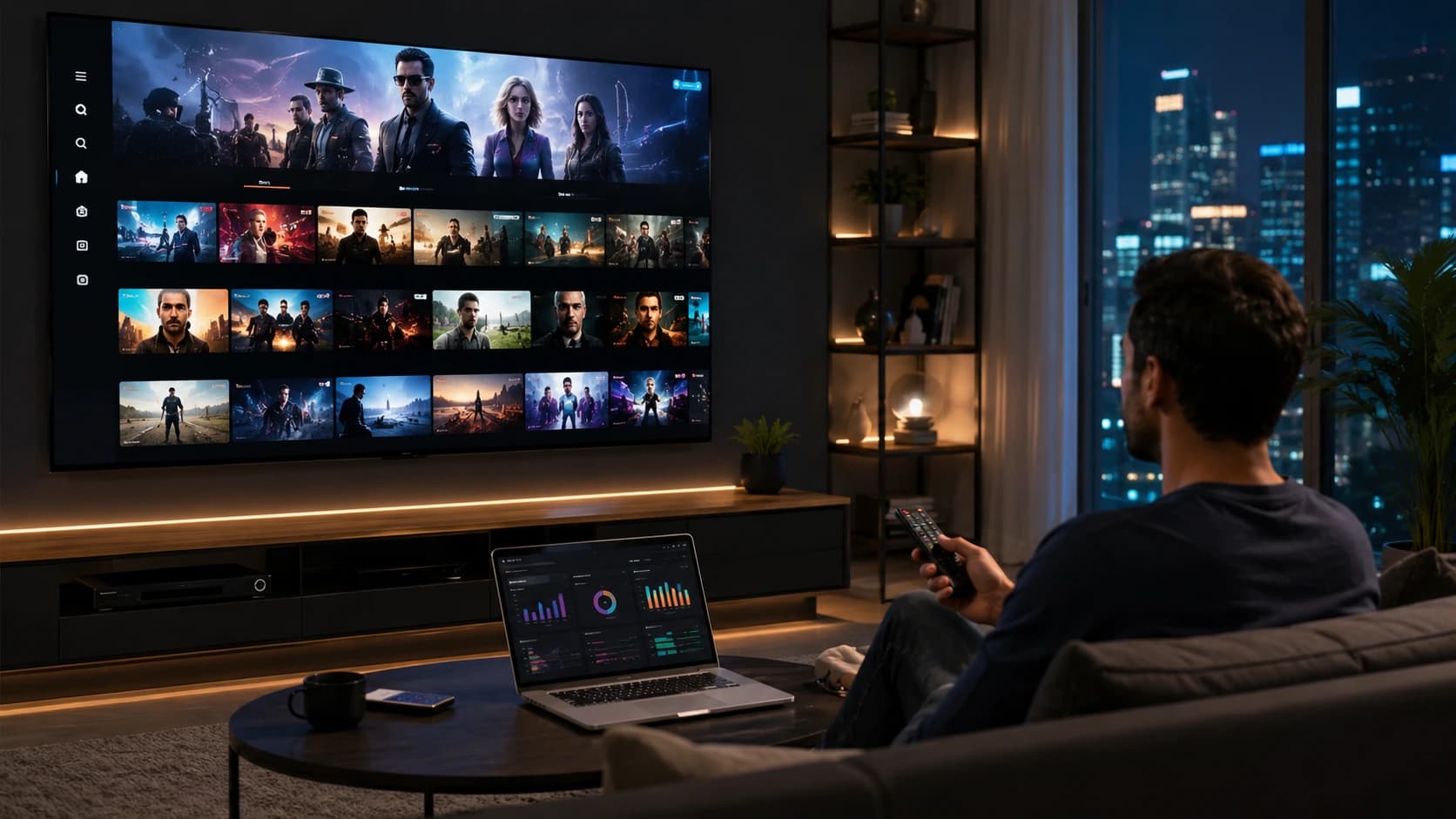
How Much Does It Cost to Build an OTT Streaming Platform Like Netflix in 2026?
The global demand for Over-the-Top (OTT) streaming platforms continues to grow rapidly in 2026, with businesses across entertainment, education, sports, healthcare, and corporate training investing in their own video streaming platforms. Whether you want to launch the next Netflix, Disney+, Amazon Prime Video, or a niche streaming service, one of the first questions you'll ask is: "How much does it actually cost to build an OTT platform?"
The answer depends on multiple factors, including the number of supported platforms (Android, iOS, Smart TV, Web, Apple TV, Fire TV, Android TV), streaming quality, AI-powered recommendations, subscription management, content delivery infrastructure, live streaming capabilities, payment gateway integration, admin dashboards, user management, and the overall complexity of your platform. A basic OTT application can be developed with a relatively modest budget, while enterprise-grade streaming ecosystems with millions of users require significantly larger investments.
Beyond development costs, businesses should also consider cloud hosting, CDN (Content Delivery Network) expenses, video encoding, DRM-based content protection, third-party licensing, ongoing maintenance, performance optimization, and future feature enhancements. Understanding these recurring expenses is essential because they often have a greater impact on the total cost of ownership than the initial development itself.
In this comprehensive guide, we'll break down OTT streaming platform development costs in 2026, compare pricing across different platform types, explain the features that influence project budgets, provide realistic cost estimates for startups and enterprises, and share practical insights to help you choose the right technology stack and development partner. By the end of this article, you'll have a clear understanding of what it takes to build a successful Netflix-like OTT streaming platform and how to maximize your return on investment.
Table of Contents
Quick Summary
Estimated Development Cost
₹15 Lakhs – ₹2+ Crores
Depends on features, supported platforms, scalability, streaming infrastructure, and business requirements.
Development Timeline
4–12 Months
Basic OTT platforms can launch within months, while enterprise-grade ecosystems require longer development.
Biggest Cost Drivers
Streaming Infrastructure
Video encoding, CDN, cloud hosting, DRM protection, recommendation engines, Smart TV apps, and live streaming significantly impact project budgets.
Best Technology Stack
Flutter + Node.js
A modern cross-platform architecture reduces development costs while delivering native-like performance across Android and iOS.
Best for
Startups, Media & Enterprises
OTT platforms are suitable for entertainment, education, fitness, healthcare, sports, religious organizations, and corporate learning.
Long-Term Investment
High ROI Potential
Subscription revenue, advertising, rentals, and premium memberships can generate recurring income for years.
OTT Streaming Platform Development Cost Breakdown
The cost of building an OTT streaming platform depends on the combination of features, supported devices, streaming infrastructure, security, scalability, and user experience. Below are the major factors that influence development costs in 2026.
1. Type of OTT Platform
Entertainment platforms, educational streaming apps, fitness services, live TV platforms, sports streaming, religious OTT apps, and corporate learning platforms all require different feature sets, directly impacting development costs.
2. Features That Affect Cost
User registration, subscription management, content categories, AI recommendations, watchlists, offline downloads, parental controls, multi-language support, live streaming, Chromecast, Smart TV compatibility, and push notifications all contribute to the overall project budget.
3. Supported Platforms
Development costs increase as more platforms are supported, including Android, iPhone, Web, Android TV, Apple TV, Fire TV, Roku, LG TV, Samsung Smart TV, and desktop browsers.
4. Streaming Infrastructure
Video encoding, adaptive bitrate streaming, CDN integration, cloud storage, DRM protection, transcoding, live streaming, and global content delivery significantly influence both development and operational expenses.
5. Admin Panel & Content Management
A powerful admin dashboard enables content uploads, category management, user administration, subscription management, analytics, advertising, payment reports, and moderation, increasing development complexity.
6. Third-Party Integrations
Payment gateways, cloud storage, Firebase, analytics tools, marketing platforms, authentication providers, DRM services, subtitle engines, recommendation APIs, and CDN providers all contribute to implementation costs.
7. Ongoing Maintenance Costs
Businesses should budget for cloud hosting, CDN usage, video storage, security updates, feature enhancements, server monitoring, customer support, and platform maintenance after launch.
8. Estimated OTT Development Cost in 2026
A basic OTT platform generally starts around ₹15–30 lakhs, while advanced platforms with subscription billing, AI-powered recommendations, Smart TV support, DRM, multi-platform apps, and enterprise-grade scalability may cost ₹75 lakhs to over ₹2 crores depending on business requirements.
OTT Platform Development Cost Comparison Tables
The following comparison tables provide a high-level overview of typical OTT platform development costs, major cost drivers, and the type of businesses each solution best serves.
| Platform Type | Estimated Cost | Best For |
|---|---|---|
| Basic OTT MVP | ₹15L–₹30L | Startups |
| Mid-Level OTT Platform | ₹30L–₹75L | Growing Businesses |
| Enterprise OTT Platform | ₹75L–₹2Cr+ | Large Enterprises |
| Feature | Cost Impact | Priority |
|---|---|---|
| Live Streaming | High | Medium–High |
| DRM Protection | High | High |
| AI Recommendations | Medium | High |
| Offline Downloads | Medium | Medium |
| Business Type | Recommended OTT Solution | Reason |
|---|---|---|
| Startup | MVP OTT Platform | Faster launch with controlled budget. |
| Media Company | Advanced OTT Platform | Subscription and content monetization. |
| Enterprise | Enterprise OTT Ecosystem | Large-scale streaming with maximum scalability. |
Real-World OTT Platform Development Examples
OTT platforms vary significantly in complexity depending on their business model, target audience, and feature requirements. The following examples illustrate how development costs typically scale across different types of streaming platforms.
🎬 Entertainment Streaming Platform
A Netflix-style OTT platform offering movies, TV shows, premium subscriptions, personalized recommendations, multiple user profiles, offline viewing, Smart TV apps, and multilingual content.
Typical Budget: ₹75 Lakhs – ₹2 Crores+
📚 Online Learning Platform
Educational OTT platforms provide recorded courses, live classes, quizzes, certificates, subscription billing, and progress tracking for students across multiple devices.
Typical Budget: ₹30 Lakhs – ₹90 Lakhs
🏋️ Fitness & Wellness Streaming
Fitness OTT platforms stream workout videos, live coaching, nutrition plans, personalized recommendations, wearable device integrations, and recurring membership subscriptions.
Typical Budget: ₹25 Lakhs – ₹70 Lakhs
🏢 Enterprise Video Platform
Large organizations build secure OTT platforms for employee training, compliance courses, corporate communications, live events, analytics, and private content distribution.
Typical Budget: ₹40 Lakhs – ₹1.5 Crores
OTT Industry Statistics in 2026
The OTT industry continues to experience rapid global growth, creating significant opportunities for businesses investing in streaming platforms and subscription-based digital services.
Global OTT streaming users are expected to exceed two billion.
Estimated worldwide OTT market value by the end of the decade.
Consumers prefer on-demand streaming over traditional television for entertainment content.
OTT viewing now takes place primarily on smartphones and smart TVs.
Cloud infrastructure enables uninterrupted global video streaming and content delivery.
Subscription, advertising, rentals, and premium memberships provide recurring revenue opportunities.
Pros & Cons of Building an OTT Streaming Platform
Developing an OTT platform offers tremendous business opportunities, but it also requires careful planning, technical expertise, and ongoing operational investment. Understanding both the advantages and challenges helps businesses make informed decisions.
✅ Advantages
- Build a recurring subscription-based revenue model.
- Complete ownership of your streaming platform and customer data.
- Unlimited branding and customization possibilities.
- Support multiple monetization models including SVOD, TVOD, and AVOD.
- Reach audiences across Android, iOS, Web, and Smart TVs.
- Scale globally using cloud infrastructure and CDNs.
- Increase customer engagement through personalized content.
- Create a long-term digital asset with strong business value.
❌ Challenges
- High initial investment for enterprise-grade platforms.
- Ongoing cloud hosting, CDN, and storage costs.
- Content licensing can become a significant expense.
- DRM implementation adds complexity and cost.
- Continuous maintenance and feature upgrades are required.
- Performance optimization becomes increasingly important as users grow.
- Multiple device support increases testing requirements.
- Competition in the OTT industry is becoming increasingly intense.
Key Takeaway
Building an OTT streaming platform is a significant investment, but when designed with scalable architecture, engaging user experiences, and sustainable monetization strategies, it can become a powerful long-term digital business capable of generating recurring revenue and serving millions of users worldwide.
Common Mistakes Businesses Make When Building an OTT Platform
Many OTT projects exceed their budgets or fail to achieve expected growth because of poor planning during the early stages. Avoiding these common mistakes can save substantial development costs and improve your platform's long-term success.
1. Trying to Copy Netflix Completely
Launching with every possible feature dramatically increases development time and costs. Start with an MVP and expand based on real user feedback.
2. Underestimating Infrastructure Costs
Many businesses only budget for development while overlooking recurring expenses such as cloud hosting, CDN, storage, video encoding, and bandwidth.
3. Ignoring Content Protection
Failing to implement DRM, secure streaming, and content encryption increases piracy risks and can damage your business.
4. Poor User Experience
Slow loading, confusing navigation, and poor video playback often lead to higher user churn and lower subscription revenue.
5. Choosing the Wrong Technology Stack
Selecting technologies that cannot scale efficiently often results in expensive redevelopment later.
6. Not Planning for Future Growth
Your platform should be capable of handling increasing users, additional content, multiple languages, and global expansion.
Best Practices for OTT Platform Development
Following proven development practices helps businesses launch a secure, scalable, and high-performing OTT platform while optimizing both initial investment and long-term operational costs.
Start with an MVP
Focus on essential streaming features first, validate your business model, and introduce advanced functionality incrementally.
Invest in Scalable Cloud Infrastructure
Choose cloud services and CDN providers that can handle traffic spikes while maintaining excellent streaming performance.
Prioritize Video Quality
Adaptive bitrate streaming, fast buffering, and optimized video delivery significantly improve viewer satisfaction.
Secure Your Content
Implement DRM, secure authentication, encrypted streaming, and role-based access controls to protect premium content.
Build for Multiple Devices
Deliver a consistent experience across smartphones, tablets, Smart TVs, web browsers, and streaming devices.
Monitor Analytics Continuously
Track user engagement, subscription performance, content popularity, and streaming quality to guide future improvements.
OTT Platform Development Planning Checklist
Use this checklist before starting your OTT platform development project to ensure you've considered the most important technical, business, and financial factors.
Why Choose RISNAR for OTT Streaming Platform Development?
At RISNAR, we design and develop secure, scalable, and feature-rich OTT streaming platforms that help businesses launch successful subscription-based video services. Whether you're building an entertainment platform, online learning portal, sports streaming app, fitness platform, or enterprise video solution, we provide end-to-end OTT development tailored to your business goals.
Complete OTT Development
From strategy and UI/UX design to development, deployment, and post-launch maintenance, we handle every stage of your OTT platform journey.
Cross-Platform Applications
Build powerful OTT apps for Android, iOS, Web, Android TV, Apple TV, Fire TV, and Smart TVs from a scalable architecture.
Enterprise-Grade Architecture
We build cloud-native platforms capable of supporting large user bases, high-quality video streaming, and future business growth.
Secure Video Streaming
DRM integration, secure authentication, encrypted content delivery, and modern security practices help protect premium video assets.
Flexible Monetization
Implement subscription plans, rentals, pay-per-view, advertisements, premium memberships, coupons, and payment gateway integrations with ease.
Long-Term Technology Partner
Beyond launch, we continue supporting our clients with feature enhancements, security updates, performance optimization, and ongoing platform maintenance.
Frequently Asked Questions
Here are answers to some of the most common questions businesses ask before investing in OTT streaming platform development.
How much does it cost to build an OTT streaming platform like Netflix?
A basic OTT platform typically starts around ₹15–30 lakhs, while advanced multi-platform streaming services with Smart TV support, AI recommendations, DRM protection, live streaming, and enterprise scalability can cost ₹75 lakhs to ₹2 crores or more.
How long does OTT platform development take?
Development generally takes between four and twelve months, depending on the number of supported platforms, feature complexity, integrations, and overall project scope.
Which platforms should my OTT application support?
Most businesses begin with Android, iOS, and Web applications, then expand to Android TV, Apple TV, Fire TV, Roku, and Smart TVs based on audience demand.
What monetization models can an OTT platform support?
Popular monetization strategies include subscription video on demand (SVOD), advertising-supported video (AVOD), transactional video on demand (TVOD), rentals, premium memberships, and pay-per-view events.
What are the biggest ongoing costs after launch?
Recurring expenses usually include cloud hosting, CDN usage, video storage, bandwidth, maintenance, security updates, monitoring, and continuous feature enhancements.
Why should I choose custom OTT platform development?
A custom OTT platform provides complete ownership, flexible branding, tailored features, stronger security, better scalability, and the ability to evolve alongside your business without the limitations of off-the-shelf solutions.
Related Articles
Continue exploring our latest guides and insights.



Ready to Launch Your Own OTT Streaming Platform?
Whether you're building the next Netflix, an online learning platform, a sports streaming service, a fitness video platform, or a private enterprise video portal, our team can help you plan, design, develop, and launch a scalable OTT ecosystem tailored to your business goals.
From architecture planning and UI/UX design to cloud infrastructure, secure streaming, subscription billing, Smart TV apps, and post-launch support, RISNAR provides complete OTT development services under one roof.
About the Author
RISNAR Editorial Team
OTT Platform & Mobile App Development Specialists
The RISNAR Editorial Team is made up of experienced software architects, Flutter developers, backend engineers, UI/UX designers, DevOps specialists, cloud architects, and digital transformation consultants. Our team regularly publishes research-driven content covering OTT platform development, mobile applications, enterprise software, cloud technologies, and scalable digital products.
We combine practical development experience with industry best practices to help startups, media companies, educational institutions, and enterprises make informed technology decisions. Every guide is created to provide transparent, actionable insights that support successful software investments.
Article Information
This guide is reviewed and updated regularly to reflect the latest OTT platform development trends, streaming technologies, cloud infrastructure practices, pricing considerations, and software engineering standards for 2026.
Last Updated
July 17, 2026